Monday, June 28, 2010
Crazy Idea - Pay what you can restaurant?!
This is a fascinating idea. How does the church get in on this? Come on, saints, we need to figure out a compelling, culturally creative opportunity like this...especially if it turns out to be financially sustainable.
Helping without Hurting
Here's part II of my summary of reflection and learnings from the Haiti5 World Relief Conference I attended two weeks ago. Part I is here.
Brian Fikkert made a presentation from his book on the topic of how to help the poor without hurting the poor. I have the book on my to-read list, so take these thoughts critically as I still need to work out his ideas in detail through his book. I thought his presentation was a good introduction however, and I'm intrigued to get to it soon.
Fikkert began by asking the question, "What is poverty?" Take a moment to formulate an answer to the question before you read below.
------------------------------------------
Citing the responses of various interviews of those in poverty-stricken situations (conducted by the Chalmers center and the World Bank separately), he noted that most responses had nothing to do with material shortages, but rather shame, inferiority, and loss of dignity. Interestingly, most Americans, when polled, defined poverty strictly in material terms. The point is this: How you define the cause and problem of poverty will directly affect how you attempt to solve it. Thus, if poverty is strictly a material condition, then our attempts to help will be strictly material.
Fikkert went on to describe the theological and relational problem of poverty. He summarized poverty as fundamentally relational. A breakdown of relationship with God, with one's self, with creation, and with others. To be fully human is experience the fullness of all of these relationships, yet poverty is the cyclical breakdown of all these spheres. I say cyclical in the sense that a breakdown in one sphere affects a breakdown in the other which causes a further breakdown in the prior. This breakdown of relationships affects all aspects of our world both individual and societal systems causing these systems to not only be unhelpful, but downright oppressive.
The solution then is about reconciling relationships in all four of these means. This is nothing less than a blending of the theological and the sociological. A lot of my conversations with those who are serious about ministering to the poor have revolved around this tension. How do you minister in the name of Jesus to real, physical, and societal needs without losing the explicit message of the Gospel? Fikkert, without using this terminology, called for a renewed theology of new creation whereby God is remaking all things, reconciling ALL relationships through Jesus. That's fine, but how does it get practical? This is where I resonated most with Fikkert's call to the church.
In radically redefining poverty, Fikkert radically redefined what it is to be poor. If poverty is described primarily in a breakdown of relationships, then as a middle class North American, I am poor in areas that those who are materially defined as "poor" are rich. I am poor in the sense that I have a God-complex which puts me at enmity with God, hostility with others, tyranny with creation, and fantasy with myself.
A proper response then to alleviating poverty and helping "the poor" begins with repentance of my own pride and acknowledgment that I am poor. This includes repenting of my own "prosperity Gospel" whereby I believe that my material blessing equates to spiritual blessing. (This is a point where I need to reflect further because it does seem that in the covenantal curses and blessings of Deuteronomy 28-31 that material blessing does come alongside spiritual blessing.) I must repent of my pride and my God-complexes, and renounce the assumption that just because I have more stuff, therefore I have more to give to the one in material poverty than he/she has to give to me.
At the conclusion of this, I suppose that the way to really help without hurting is a genuine humility that acknowledges my own brokenness and need for help. I find myself coming to a place where I am beginning to truly believe that the materially poor (and other ethnicities for that matter) have something to teach me about who God is and what He desires of me.
So thinking about your definition of poverty, what needs to change?
Brian Fikkert made a presentation from his book on the topic of how to help the poor without hurting the poor. I have the book on my to-read list, so take these thoughts critically as I still need to work out his ideas in detail through his book. I thought his presentation was a good introduction however, and I'm intrigued to get to it soon.
Fikkert began by asking the question, "What is poverty?" Take a moment to formulate an answer to the question before you read below.
------------------------------------------
Citing the responses of various interviews of those in poverty-stricken situations (conducted by the Chalmers center and the World Bank separately), he noted that most responses had nothing to do with material shortages, but rather shame, inferiority, and loss of dignity. Interestingly, most Americans, when polled, defined poverty strictly in material terms. The point is this: How you define the cause and problem of poverty will directly affect how you attempt to solve it. Thus, if poverty is strictly a material condition, then our attempts to help will be strictly material.
Fikkert went on to describe the theological and relational problem of poverty. He summarized poverty as fundamentally relational. A breakdown of relationship with God, with one's self, with creation, and with others. To be fully human is experience the fullness of all of these relationships, yet poverty is the cyclical breakdown of all these spheres. I say cyclical in the sense that a breakdown in one sphere affects a breakdown in the other which causes a further breakdown in the prior. This breakdown of relationships affects all aspects of our world both individual and societal systems causing these systems to not only be unhelpful, but downright oppressive.
The solution then is about reconciling relationships in all four of these means. This is nothing less than a blending of the theological and the sociological. A lot of my conversations with those who are serious about ministering to the poor have revolved around this tension. How do you minister in the name of Jesus to real, physical, and societal needs without losing the explicit message of the Gospel? Fikkert, without using this terminology, called for a renewed theology of new creation whereby God is remaking all things, reconciling ALL relationships through Jesus. That's fine, but how does it get practical? This is where I resonated most with Fikkert's call to the church.
In radically redefining poverty, Fikkert radically redefined what it is to be poor. If poverty is described primarily in a breakdown of relationships, then as a middle class North American, I am poor in areas that those who are materially defined as "poor" are rich. I am poor in the sense that I have a God-complex which puts me at enmity with God, hostility with others, tyranny with creation, and fantasy with myself.
A proper response then to alleviating poverty and helping "the poor" begins with repentance of my own pride and acknowledgment that I am poor. This includes repenting of my own "prosperity Gospel" whereby I believe that my material blessing equates to spiritual blessing. (This is a point where I need to reflect further because it does seem that in the covenantal curses and blessings of Deuteronomy 28-31 that material blessing does come alongside spiritual blessing.) I must repent of my pride and my God-complexes, and renounce the assumption that just because I have more stuff, therefore I have more to give to the one in material poverty than he/she has to give to me.
At the conclusion of this, I suppose that the way to really help without hurting is a genuine humility that acknowledges my own brokenness and need for help. I find myself coming to a place where I am beginning to truly believe that the materially poor (and other ethnicities for that matter) have something to teach me about who God is and what He desires of me.
So thinking about your definition of poverty, what needs to change?
Pray for Haiti
Our Student Ministry is currently on a trip to Haiti with YWAM. You can pray for them and follow updates here.
Friday, June 25, 2010
Reflections on FCA Golf Camp 2010
So after a week of talking about golf and the Gospel (not necessarily trying to relate the two), I think an attempt to link the two is warranted. So here's my first run at how golf reminds me of the Gospel. I'll give it in the form of short golf tips as if I was instructing you on the game of golf.
1. "The harder you swing, the less likely you are to hit it pure." The Gospel confronts our innate tendency to save ourselves. It seems that at every turn, I want to defend myself or rationalize my standing before God. I can fool myself into thinking that my failures are simply because I didn't try hard enough or wasn't vigilant. I excuse my lack of holiness by simply recommitting my life to do better or try harder. The Gospel says NO. The Gospel says that my standing before God is secured by what Jesus has done, and the Gospel calls me to surrender more, to be dependent more, and that in weakness is the way to "hit it pure".
2. "You've got to set yourself up to make a good swing." A good golf swing requires a good grip, good stance, and good posture. These set you up for a good swing (although it doesn't guarantee it). Likewise, the Gospel sets us up to make a good swing. It doesn't let us off the hook by saying that our outward actions don't matter. In fact, the Gospel sets us up to be in a place of true authenticity by securing our identity and giving us courage to step out boldly in faith. The Gospel releases us to pursue genuine character - the kind of character that represents someone who is now living in the kingdom. By faith in Jesus and repentance, God promises us the Holy Spirit to empower us and to motivate to live holy lives. The Spirit is essential to a fruitful life.
3. "This game is so much more enjoyable with playing partners." I can't think of many people who enjoy playing golf by themselves. I've done it on occasion for practice, and I don't find nearly the same joy in it. Needless to say, the Christian life was meant to be lived out and experienced in community - a community that the Gospel creates and energizes as diverse people come to experience a communal grace.
4. "You've to play to your own par." We can spend so much time comparing ourselves to others that we lose the gratitude and contentment for how far God has brought us.
5. "Repetition. Repetition. Repetition." The way to groove a good swing is to practice, practice, practice. Hand positions, transition, takeaway, stance, etc. In the same way, I have been reflecting on how the Gospel gives us power through His Spirit to form our character (see N.T. Wright's book, After You Believe). Wright defines character as the power of right habits - that is, learning to live a life that anticipates the coming kingdom kind of life now. It's about training ourselves through the power of the Spirit and the grace of God a thousand times so that on the thousand and first time, we choose holiness as a matter of second nature. I'm sure I'll be writing more about this in the near future.
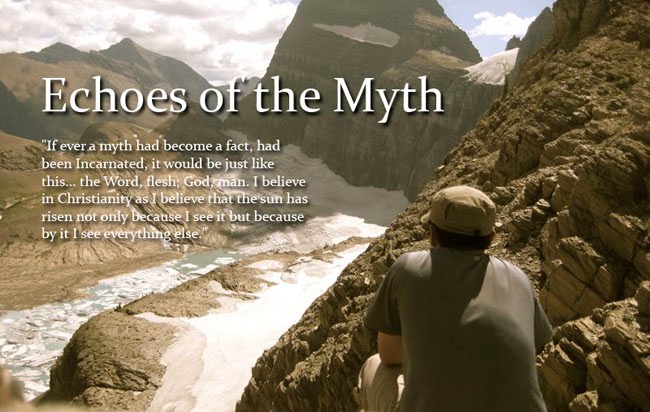
Well, I'll end these reflections there. Obviously, there's so many more ways to apply the Gospel. It's just amazing to me how there are echoes of this true myth everywhere if only we'll stop to observe and reflect.
1. "The harder you swing, the less likely you are to hit it pure." The Gospel confronts our innate tendency to save ourselves. It seems that at every turn, I want to defend myself or rationalize my standing before God. I can fool myself into thinking that my failures are simply because I didn't try hard enough or wasn't vigilant. I excuse my lack of holiness by simply recommitting my life to do better or try harder. The Gospel says NO. The Gospel says that my standing before God is secured by what Jesus has done, and the Gospel calls me to surrender more, to be dependent more, and that in weakness is the way to "hit it pure".
2. "You've got to set yourself up to make a good swing." A good golf swing requires a good grip, good stance, and good posture. These set you up for a good swing (although it doesn't guarantee it). Likewise, the Gospel sets us up to make a good swing. It doesn't let us off the hook by saying that our outward actions don't matter. In fact, the Gospel sets us up to be in a place of true authenticity by securing our identity and giving us courage to step out boldly in faith. The Gospel releases us to pursue genuine character - the kind of character that represents someone who is now living in the kingdom. By faith in Jesus and repentance, God promises us the Holy Spirit to empower us and to motivate to live holy lives. The Spirit is essential to a fruitful life.
3. "This game is so much more enjoyable with playing partners." I can't think of many people who enjoy playing golf by themselves. I've done it on occasion for practice, and I don't find nearly the same joy in it. Needless to say, the Christian life was meant to be lived out and experienced in community - a community that the Gospel creates and energizes as diverse people come to experience a communal grace.
4. "You've to play to your own par." We can spend so much time comparing ourselves to others that we lose the gratitude and contentment for how far God has brought us.
5. "Repetition. Repetition. Repetition." The way to groove a good swing is to practice, practice, practice. Hand positions, transition, takeaway, stance, etc. In the same way, I have been reflecting on how the Gospel gives us power through His Spirit to form our character (see N.T. Wright's book, After You Believe). Wright defines character as the power of right habits - that is, learning to live a life that anticipates the coming kingdom kind of life now. It's about training ourselves through the power of the Spirit and the grace of God a thousand times so that on the thousand and first time, we choose holiness as a matter of second nature. I'm sure I'll be writing more about this in the near future.
Well, I'll end these reflections there. Obviously, there's so many more ways to apply the Gospel. It's just amazing to me how there are echoes of this true myth everywhere if only we'll stop to observe and reflect.
Friday, June 18, 2010
Another week of speaking
Well, I'm off on the second of three speaking engagements this summer. FCA golf camp in Franklin, IN from Sat - Thurs, then off to Houston from Thurs to Sat to represent Compassion International at a Servant Leadership camp. I'd appreciate your prayers for this week. Both for me as I speak, and for my dear wife who will be holding down the fort while I'm gone. It never ceases to amaze me the amount of strength, courage, and patience she demonstrates as she gladly sends me on these opportunities for ministry.
At the same time, I am reminded of my own weakness and my desperate need for grace as I speak about a Jesus that I myself am struggling to pursue. I'll be talking about character and virtue at the first venue and compassion and leadership at the second. Please join me in prayer asking God to soften hearts and for boldness and passion as I speak. I'll update in a few days from Franklin.
Subscribe to:
Posts (Atom)

